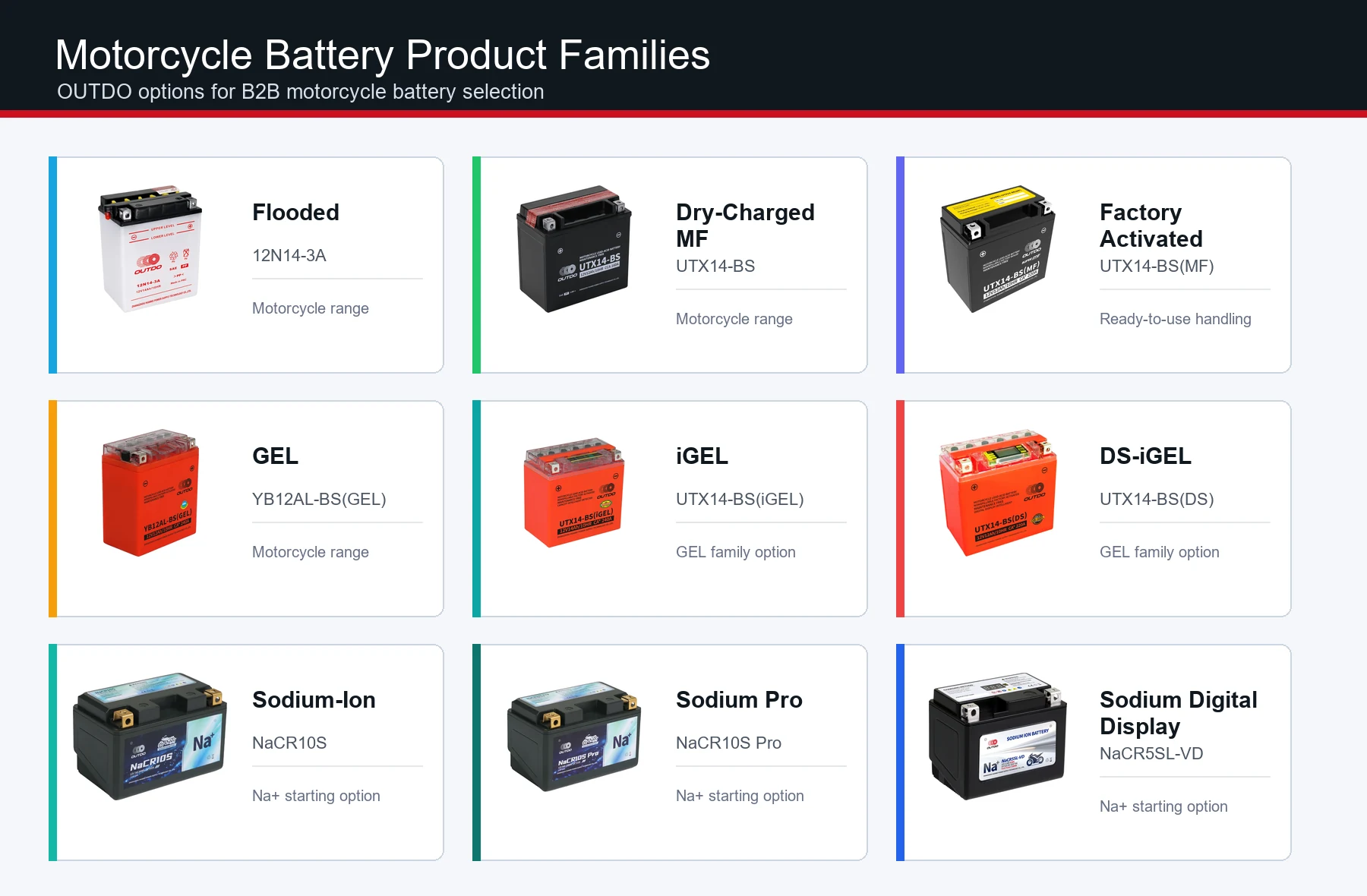
OUTDO motorcycle battery product families for B2B selection.
Choosing between motorcycle battery types is not only a technical decision. For distributors, OEM buyers and replacement battery program managers, the right choice affects fitment accuracy, stock planning, activation work, charging compatibility, warranty risk and how clearly a product line can be sold in the market.
The main motorcycle battery types buyers compare today are flooded lead-acid, dry-charged maintenance-free lead-acid, AGM / factory activated maintenance-free lead-acid, GEL-family, lithium-ion and sodium-ion. Each type has a different balance of cost, convenience, weight, storage behavior, charging requirements and application fit.
The short answer is this: flooded lead-acid remains a practical cost-focused choice, dry-charged MF helps distributors manage stock and activation, AGM / factory activated MF supports ready-to-use low-maintenance handling, GEL-family options cover GEL, iGEL capacity-display and DS-iGEL digital-display needs, lithium-ion is an industry comparison for lightweight premium applications, and sodium-ion is a newer starting-battery route for buyers who want a differentiated option with confirmed model fit, voltage, capacity and charging requirements.
For B2B buyers, the best battery is not the one with the longest list of claims. It is the one that matches the motorcycle, charging system, climate, service model, local price level and after-sales process.
Quick Comparison of Motorcycle Battery Types
| Battery type | Main buyer value | Watch-outs before ordering | Best-fit use case |
| Flooded lead-acid | Mature technology, broad availability and strong cost control | Electrolyte handling, activation, maintenance and storage discipline | Price-sensitive replacement markets and traditional motorcycle applications |
| Dry-charged MF lead-acid | Better stock flexibility for programs that manage activation and handling | Confirm activation process and storage rules | Distributor programs that need maintenance-free positioning with controlled activation |
| AGM / factory activated MF lead-acid | Ready-to-use, sealed and low-maintenance convenience | Confirm fitment, voltage, capacity and charging compatibility | Replacement programs that value cleaner retail and service handling |
| GEL family | Sealed GEL construction plus iGEL capacity-display and DS-iGEL digital-display options | Charging compatibility is important; improper charging can shorten service life | Markets where sealed construction, status visibility and stable handling matter |
| Lithium-ion | Low weight and premium positioning | Requires fitment, charging, BMS and cold-start checks | Premium motorcycle or powersports applications when compatibility is confirmed |
| Sodium-ion | Newer starting battery option with cold-weather, recharge-positioning and digital-display potential | Confirm model-level voltage, capacity, charging and fitment before ordering | Buyers building a differentiated motorcycle starting battery range |
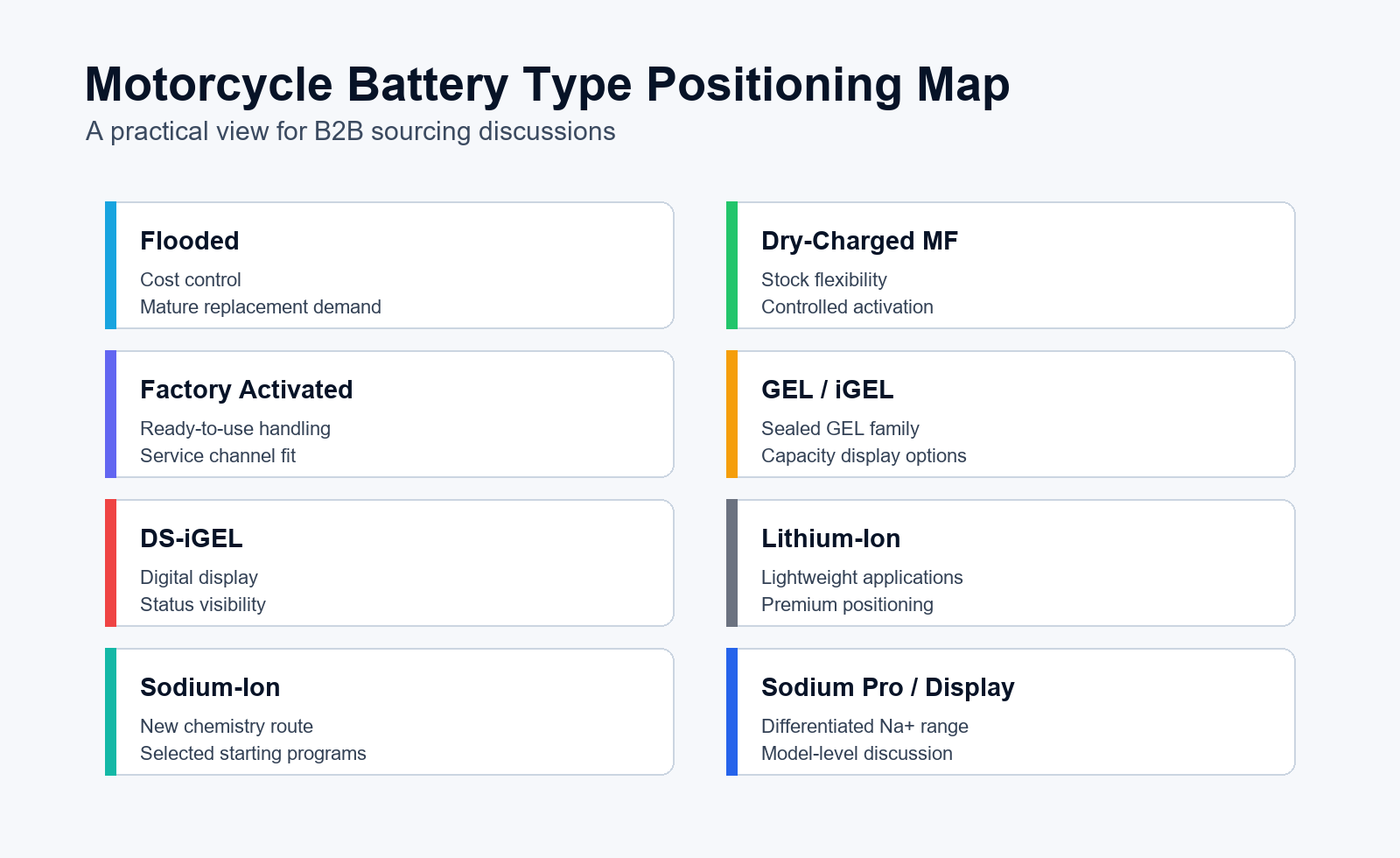
How major motorcycle battery types are positioned for sourcing decisions.
Climate and Charging Compatibility Matter
Many battery problems are not caused by the battery type alone. They happen because the wrong battery is matched with the wrong motorcycle, charger, climate or storage routine.
Cold weather can expose weak starting performance, poor state of charge and mismatched sizing. Hot weather can accelerate aging if storage and charging are poorly managed. Rough roads and vibration can also push buyers toward sealed or more robust product families, but vibration resistance should still be checked against the actual product specification.
Charging compatibility is especially important when comparing GEL, AGM, lithium-ion and sodium-ion batteries. These battery types should not be treated as interchangeable just because they share a voltage class or a similar case size. Buyers should confirm the motorcycle charging system, charger profile, battery management requirements and warranty conditions before placing a large order.
For distributors, this is also a returns-management issue. A product that looks attractive on paper can create after-sales pressure if local installers use the wrong charger, if stock is stored too long without charge control, or if sales teams recommend a battery only by size without checking chemistry and application.
- Flooded Lead-Acid Motorcycle Batteries
Flooded lead-acid is one of the most familiar motorcycle battery categories. It is widely understood, cost-effective and suitable for many traditional replacement markets. For buyers who need broad coverage at a controlled price point, flooded lead-acid can still be a practical part of the range.
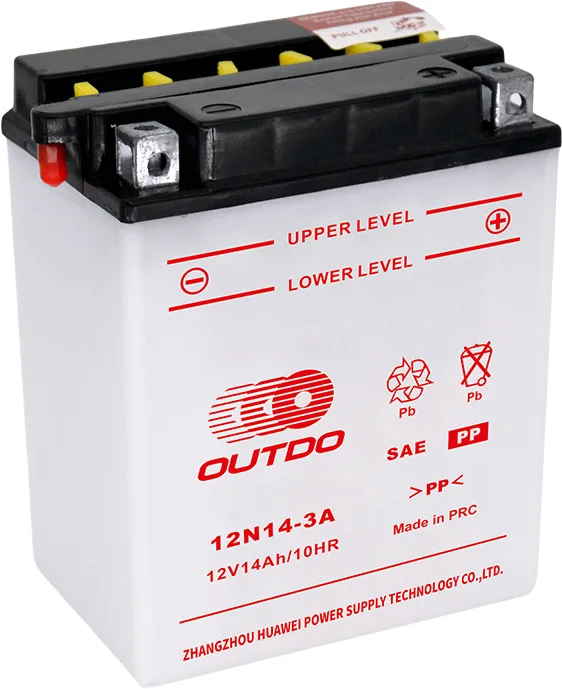
OUTDO 12N14-3A flooded lead-acid motorcycle battery.
The tradeoff is service discipline. Depending on the model and supply program, flooded lead-acid batteries may involve electrolyte handling, activation, storage checks and maintenance expectations. That makes them better for channels that can manage preparation and service instructions clearly.
For B2B buyers, flooded lead-acid is usually worth considering when:
- The market is highly price-sensitive.
- Installers or dealers can handle activation and service instructions.
- The buyer needs familiar models for conventional replacement demand.
- Warranty risk can be controlled through clear handling guidance.
OUTDO’s Flooded Motorcycle Battery category is the relevant public product page for this section.
- Dry-Charged MF Motorcycle Batteries
Dry-charged maintenance-free batteries are important for replacement programs that need stock flexibility and controlled activation. They are useful when the sales channel understands how the product should be prepared before installation.
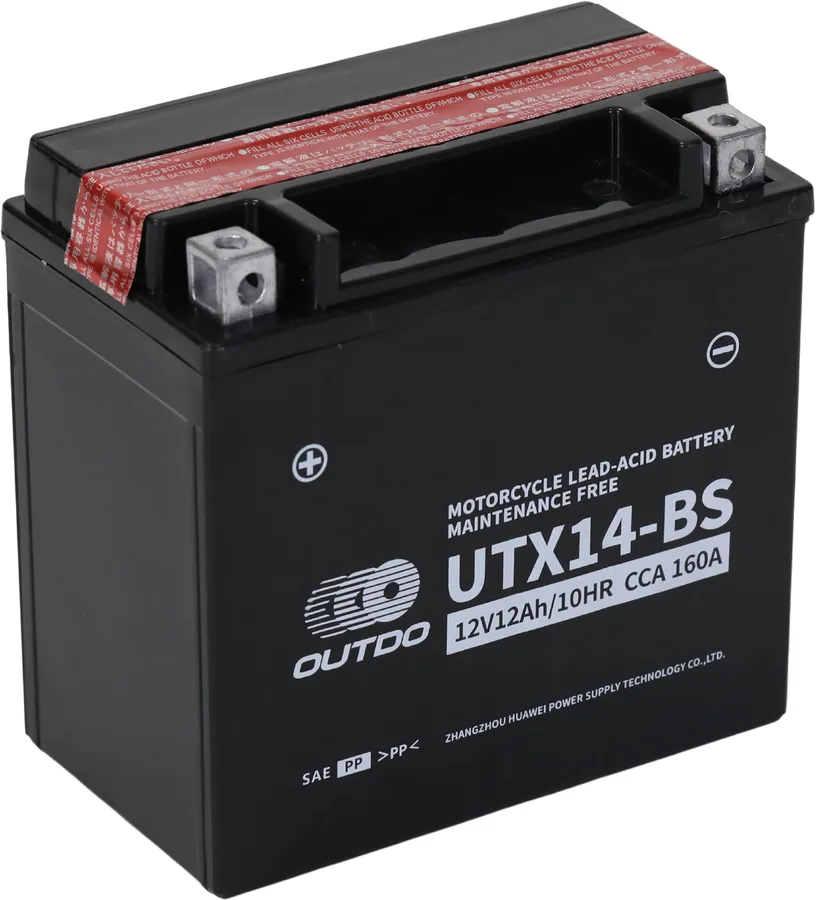
OUTDO UTX14-BS dry-charged maintenance-free motorcycle battery.
For distributors, this category is mainly about inventory planning, activation workflow and service instructions before installation. It can help programs serve maintenance-free demand while keeping stock preparation under control.
OUTDO’s Dry Charged MF Motorcycle Battery category is the relevant public product page for this section.
- AGM and Factory Activated Motorcycle Batteries
AGM, or absorbent glass mat, is a sealed lead-acid construction used across many battery markets. Buyers often compare AGM motorcycle batteries because they want sealed construction, reduced maintenance, vibration resistance and cleaner handling.
OUTDO Factory Activated Motorcycle Battery is the relevant ready-to-use maintenance-free product-family link for buyers comparing AGM / MF convenience. This product family fits naturally in the AGM buying context because customers are usually looking for sealed, low-maintenance and cleaner service handling.
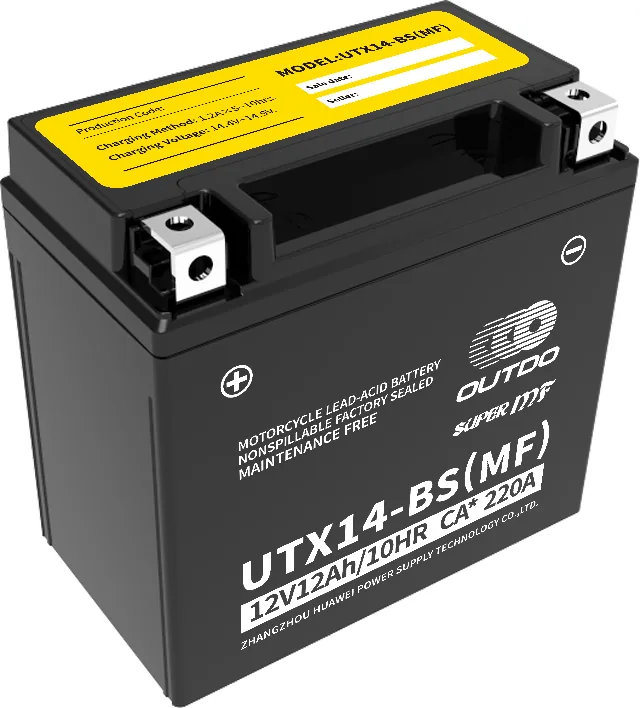
OUTDO UTX14-BS MF factory activated motorcycle battery.
For practical sourcing, buyers should confirm model fitment, voltage, capacity, terminal layout, charging compatibility and warranty terms before ordering.
For general technical background, AGM is part of the broader VRLA battery family. Product-specific AGM claims should still match the current supplier documentation.
- GEL Motorcycle Batteries
GEL motorcycle batteries use a gelled electrolyte format and are often considered when buyers want sealed construction, stable handling and better suitability for vibration or rough-use conditions. They are a useful option for distributors building a higher-value lead-acid lineup beyond the lowest-cost flooded products.
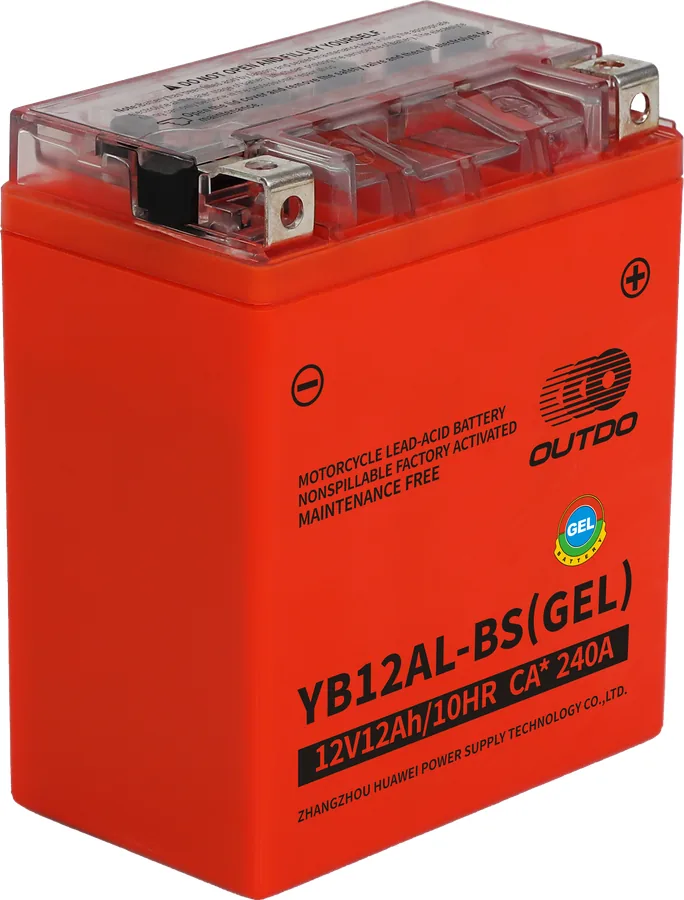
OUTDO YB12AL-BS GEL motorcycle battery.
The main caution is charging. GEL batteries can be sensitive to improper charging voltage or incompatible chargers, so they should be sold with clear charging and installation guidance. For large replacement programs, this matters because charger mismatch can turn into warranty claims even when the product itself is suitable.
GEL can be a good fit when:
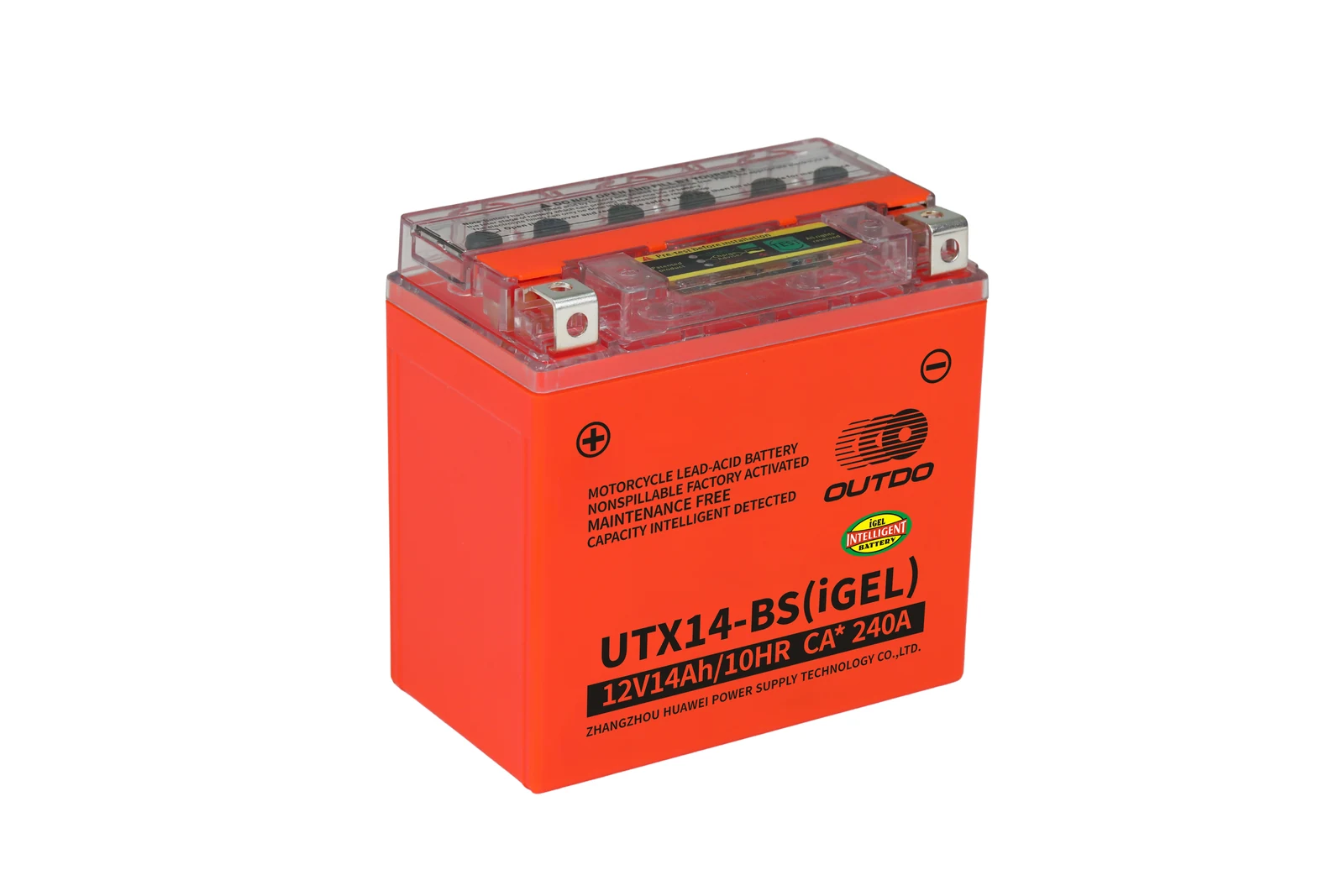
OUTDO UTX14-BS iGEL capacity-display motorcycle battery.
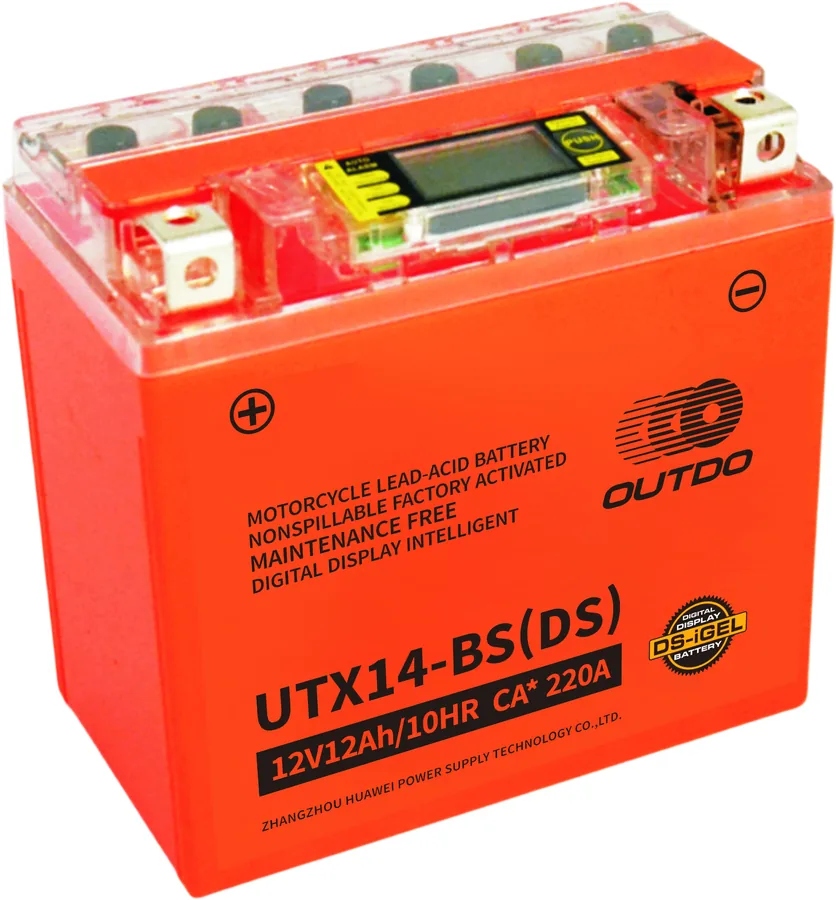
OUTDO UTX14-BS DS digital display motorcycle battery.
- The market wants sealed battery handling.
- The product will be used in rougher riding or vibration-prone conditions.
- The buyer can educate dealers on compatible charging.
- The program needs a stronger mid-range or premium lead-acid option.
OUTDO’s GEL Motorcycle Battery category is the relevant public product page for this section. Related GEL-family options include iGEL Motorcycle Battery for capacity-display positioning and DS-iGEL Motorcycle Battery for digital-display positioning.
- Lithium-Ion Motorcycle Batteries
Lithium-ion motorcycle batteries are usually considered for lightweight and premium applications. They can be attractive where weight reduction, compact packaging and high-end positioning matter, so buyers may compare them as an industry option even when a supplier’s motorcycle range is focused on lead-acid, GEL-family and sodium-ion products.
They are not a universal replacement for lead-acid. Buyers need to check fitment, battery management protection, charger compatibility, cold-start behavior, local service capability and price expectations. A lithium-ion battery that works well in one application may not be the right commercial choice for a broad replacement program.
For B2B sourcing, lithium-ion should be evaluated through model-level evidence. Before adding it to a catalog or replacing a lead-acid model with a lithium option, buyers should confirm:
- The exact voltage and size match.
- The terminal layout and case fit the vehicle.
- The motorcycle charging system is compatible.
- The battery has the required protection design.
- The local channel can explain charging, storage and warranty rules.
For projects that require lithium-ion, buyers should request model-level confirmation, charger guidance and warranty terms before adding it to a sourcing plan.
- Sodium-Ion Motorcycle Batteries
Sodium-ion motorcycle batteries are a newer option for starting battery programs. They are especially useful for buyers watching cold-weather performance, recharge behavior and next-generation chemistry trends.
OUTDO has a public Sodium-Ion Motorcycle Battery product page for the standard sodium-ion motorcycle battery category. For buyers comparing sodium-ion with lithium-ion starting options, sodium-ion can be discussed as an alternative route where fitment, voltage, capacity, charging profile and warranty terms are confirmed against current product documentation.
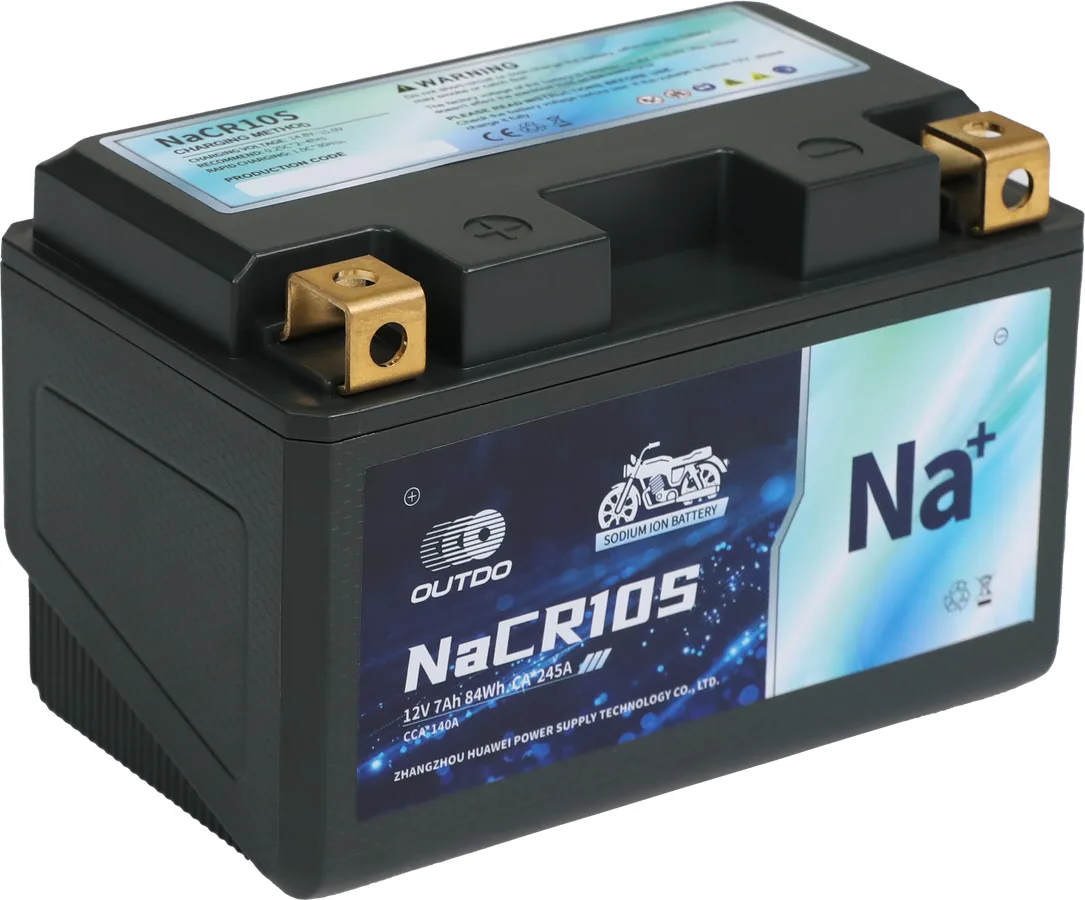
OUTDO NaCR10S sodium-ion motorcycle starting battery.
Digital voltage display is another useful direction within sodium-ion starting batteries. A model such as NaCR5SL-VD gives buyers a clearer way to show battery status during display, inspection and service communication. For distributor or OEM projects, the final model list, packaging and performance data should be confirmed with OUTDO before ordering.
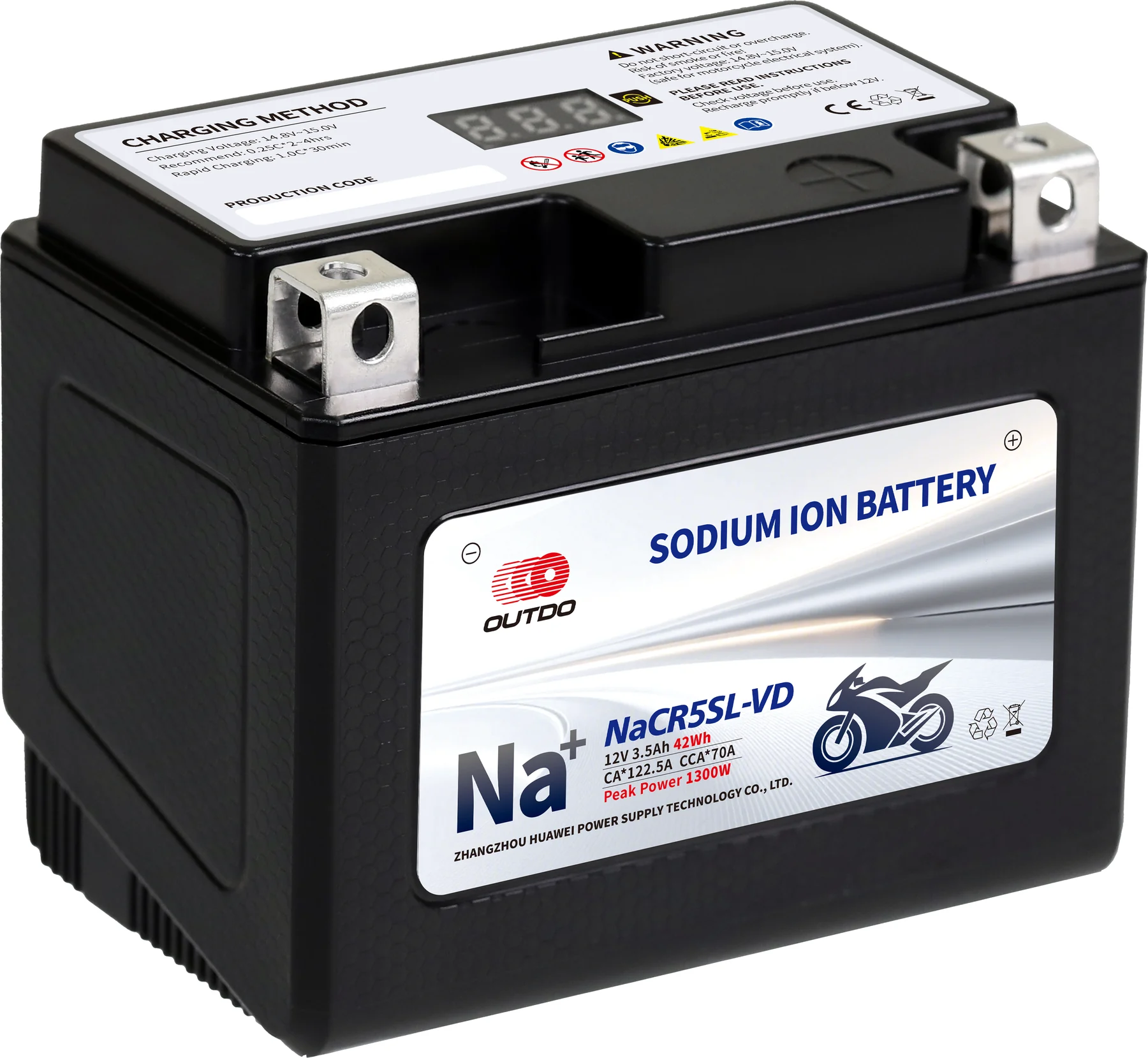
OUTDO NaCR5SL-VD sodium-ion battery with digital voltage display.
For distributors and OEM buyers, sodium-ion can fit programs when:
- The market has cold-start or battery-status visibility concerns.
- The buyer wants a differentiated product line.
- The channel can explain a newer chemistry clearly.
- The program has enough volume to support launch education.
- The buyer can verify model-level fitment, voltage, capacity and charging requirements.
Because sodium-ion is newer than conventional lead-acid categories in many markets, buyers should avoid treating it as a one-for-one chemistry swap without testing. A responsible launch should include sample validation, installer guidance, warranty rules and a clear comparison against the buyer’s existing lead-acid lineup.
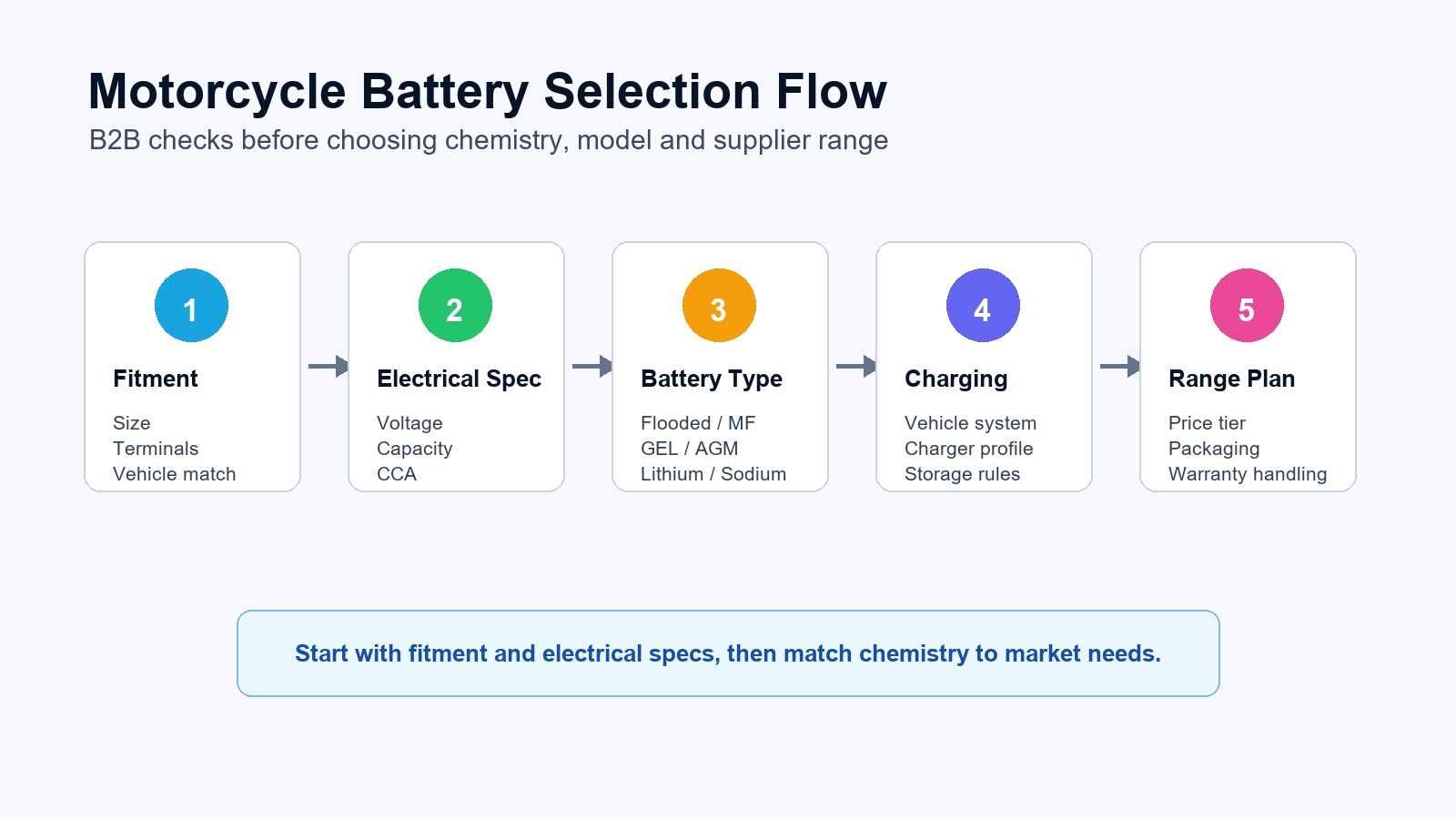
B2B motorcycle battery selection workflow.
The right motorcycle battery type depends on the whole buying context, not just chemistry. Use the following process before selecting a product range.
- Start with fitment
Confirm the battery model, dimensions, terminal position, polarity, voltage class and installation space. Fitment errors are one of the fastest ways to create returns.
- Match the battery type to the market
For price-driven markets, flooded or dry-charged options may be important. For cleaner retail handling, factory activated or sealed products may be stronger. For premium or differentiated programs, GEL, lithium-ion or sodium-ion may deserve closer review.
- Check charging compatibility
A shared 12V label does not mean every motorcycle battery can use the same charger or charging profile. GEL, AGM, lithium-ion and sodium-ion options should be checked carefully.
- Plan stock and activation work
Some batteries are better for channels that can manage activation and preparation. Others are better for ready-to-use retail programs. The lowest unit price is not always the lowest total cost if handling creates warranty pressure.
- Build a tiered product lineup
Many distributors do not need only one battery type. A practical range may include an entry lead-acid option, a convenient maintenance-free option, a GEL option for higher-value applications and a newer chemistry option for selected markets.
- Verify claims before printing catalogs
Before printing brochures, building product pages or releasing comparison tables, confirm the exact claim source. Model names, chemistry labels, low-temperature statements, certification language, capacity data and product images should all match approved documentation.
OUTDO Product-Family Context
For buyers comparing motorcycle battery types, OUTDO’s public motorcycle battery range includes multiple product-family pages:
- Motorcycle battery product center
- Flooded Motorcycle Battery
- Dry Charged MF Motorcycle Battery
- Factory Activated Motorcycle Battery
- GEL Motorcycle Battery
- iGEL Motorcycle Battery
- DS-iGEL Motorcycle Battery
- Sodium-Ion Motorcycle Battery
These product-family pages should be discussed according to the actual page name, model evidence and buyer application. For example, GEL, iGEL and DS-iGEL can be grouped as related sealed or intelligent GEL-family options in article structure, but their links, images and model examples should not be mixed.
For higher-positioned sodium-ion motorcycle programs, model detail pages such as NaCR10S Pro can help buyers review specific product options.
If you are choosing a motorcycle battery program for a market, the safest next step is to share your target models, climate, price level, annual volume, packaging needs and warranty expectations with the supplier before finalizing the range.
FAQ
What are the main motorcycle battery types?
The main motorcycle battery types are flooded lead-acid, dry-charged MF, AGM / factory activated MF, GEL-family, lithium-ion and sodium-ion. For sourcing, buyers should also check the exact model, case size, terminal layout and charging compatibility.
What is the most common motorcycle battery type?
Lead-acid batteries remain a common motorcycle battery category because the technology is mature, widely available and cost-effective. Within lead-acid, buyers may compare flooded, dry-charged MF, AGM / factory activated MF and GEL-family options depending on the market.
Is a GEL motorcycle battery good for motorcycles?
Yes, GEL can be a good option for motorcycles when sealed construction and vibration resistance are important. Buyers should confirm charging compatibility because GEL batteries can be sensitive to improper charging conditions.
Is lithium-ion better than lead-acid for motorcycles?
Lithium-ion can be better for lightweight or premium applications, but it is not automatically better for every motorcycle. Buyers should verify fitment, charging compatibility, BMS protection, cold-start behavior and warranty support before replacing lead-acid with lithium-ion.
What is a sodium-ion motorcycle battery?
A sodium-ion motorcycle battery uses sodium-ion chemistry instead of conventional lead-acid chemistry. It is a newer starting battery option for selected applications, and buyers should rely on official model data and sample testing before launching it in a replacement program.
Does OUTDO have a sodium-ion battery with a digital voltage display?
NaCR5SL-VD is an OUTDO sodium-ion battery example with a digital voltage display window. This type of display can help buyers and service channels check battery status more visibly during presentation and routine handling.
Which motorcycle battery type is best for cold weather?
There is no single answer for every motorcycle or market. Cold-weather selection should be based on the required starting performance, battery size, chemistry, state of charge, official model data and local testing. Sodium-ion can be a strong product-line direction where cold-start performance is a priority.
What should distributors check before ordering motorcycle batteries?
Distributors should check model fitment, dimensions, terminals, voltage, battery type, activation method, charging compatibility, storage life, packaging, warranty handling, image accuracy and product-page claims before placing a large order.
Conclusion
Motorcycle battery types should be compared through real application needs, not just chemistry names. Flooded lead-acid can control cost, dry-charged MF can support stock preparation and activation control, AGM / factory activated MF can support ready-to-use low-maintenance handling, GEL-family options can cover sealed, capacity-display and digital-display needs, lithium-ion can serve premium lightweight applications, and sodium-ion gives buyers a newer route for selected starting battery markets, including digital-display models for programs that need a more visible battery-status presentation.
For a reliable B2B battery program, start with fitment, confirm charging compatibility, verify product claims and use accurate product images before publishing or ordering. To discuss a motorcycle battery range for your market, contact OUTDO with your target models, application requirements and expected order plan.